A little moss isn’t an emergency, but a lot of it is bad for a roof. Thick moss holds water against the tiles like a sponge, can lift tiles as it grows, and washes into gutters where it causes blockages and overflows. It’s best dealt with before it covers whole slopes.
What does moss actually do to a roof?
Moss does its damage in three ways: it holds water, it lifts tiles and it blocks gutters. None of these happen overnight, but all of them get worse every winter the moss is left.
It holds water against the tiles
Moss is a sponge. After rain it stays wet long after the rest of the roof has dried, so the tiles underneath stay damp too. Concrete and clay tiles are designed to get wet and dry out; being kept wet for long periods isn’t what they’re designed for. In a hard frost, water held in moss and in the tile surface can freeze and expand, which over time can flake the surface.
It lifts tiles
Moss grows thickest in the overlaps between tiles, where water and debris collect. As cushions grow, they can lift the tail of the tile above slightly. That opens a gap, and wind-driven rain can get in under the tile.
It blocks gutters and downpipes
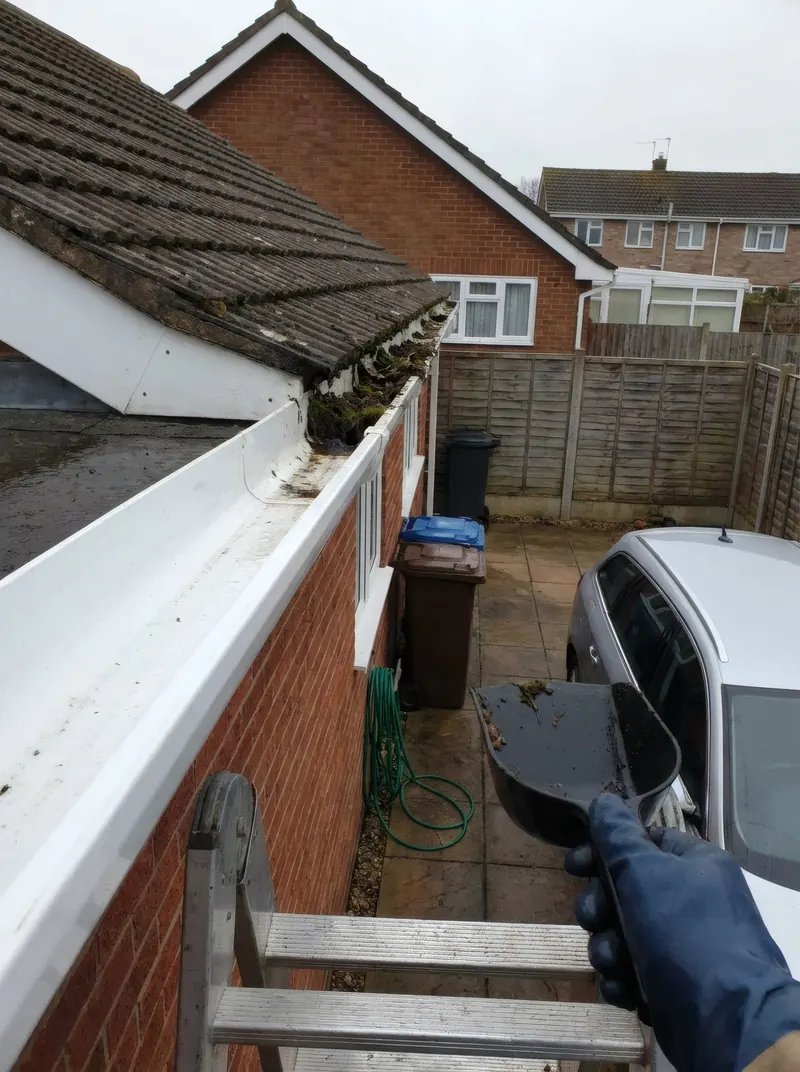
This is the one most people notice first. Moss dries, loosens and washes down into the gutters, where it sits with leaves and silt and stops water flowing. Overflowing gutters soak walls, fascias and the ground near the house. Blocked downpipes can do the same.
Does moss cause roof leaks?
Not usually directly. Leaks come from broken, slipped or missing tiles, failed flashings and worn-out underlay. Moss can contribute by lifting tiles and by blocking gutters so water backs up, but if you have a leak, a roofer should look at it before anyone cleans the roof.
Is a little moss okay?
Yes. A few small cushions on an older roof are normal and not worth worrying about. The time to act is when moss starts covering a good part of a slope, filling the laps between tiles, or turning up in the gutters and on the ground after windy weather.
Why does moss grow on some roofs and not others?
Mainly shade and damp. North-facing slopes, roofs under trees and roofs near water stay wet for longest, and moss loves them. Rough, ageing concrete tiles give it the best grip. Smooth slate gives it the least. That’s why two houses on the same road can look completely different.
Should moss be removed in winter or summer?
Either works, as long as there’s a dry spell. Moss is easier to lift when it’s damp and green; the biocide needs dry weather to soak in afterwards. We plan around the forecast rather than the calendar. More on timing in our post on the best time of year to clean a roof.
What’s the right way to get moss off?
By hand, then a soft wash and a biocide. Thick moss is lifted off by hand so there’s no need for force. The roof is then soft-washed at low pressure to kill what’s left, including the roots and spores you can’t see. The biocide keeps working after we’ve gone, so new growth is slow to return. Moss and debris are cleared from the gutters and the ground before we leave.
What we don’t do is jet wash it off. A pressure washer strips the surface off tiles along with the moss, and moss grows back faster on a roughened tile. There’s more on that in does roof cleaning damage tiles?
What about moss killer from a garden centre?
Garden products are made for lawns and paths, not roofs, and applying anything to a roof means working at height. It isn’t a job to do from a ladder with a sprayer. If moss is only on a shed or a low porch roof you can safely reach, a soft brush is a better first step than a chemical.
Can moss damage solar panels or roof windows?
It can collect around them. Moss and debris build up along the bottom edges of solar panels and the upstand of roof windows, where water slows down. That can hold water against flashings. We clear these areas by hand during a clean.
Does moss affect insurance or a mortgage survey?
Surveyors note heavy moss and blocked gutters as maintenance items, and home insurance policies generally expect a home to be kept in reasonable repair. Moss itself is rarely the issue; the damage it can lead to, such as overflowing gutters and damp walls, is. If you’re unsure, your own policy wording is the place to check.
Does moss come back after it’s removed?
Eventually, on most roofs, because spores land everywhere. The biocide finish slows that right down, and a treatment when the first green shows keeps it from building up again. Roofs under trees need that top-up sooner than open ones.
In short
- A little moss is fine; slopes covered in it are not.
- Moss holds water, lifts tiles and blocks gutters.
- Remove it by hand and soft wash, never jet wash.
What it comes down to
- A little moss: fine, keep an eye on it.
- Moss spreading across slopes or in the gutters: worth dealing with.
- Moss plus broken tiles or leaks: call a roofer first, then clean.
Send us a photo of your roof and your postcode, and we’ll tell you honestly which of those you’re looking at. Get a free quote.