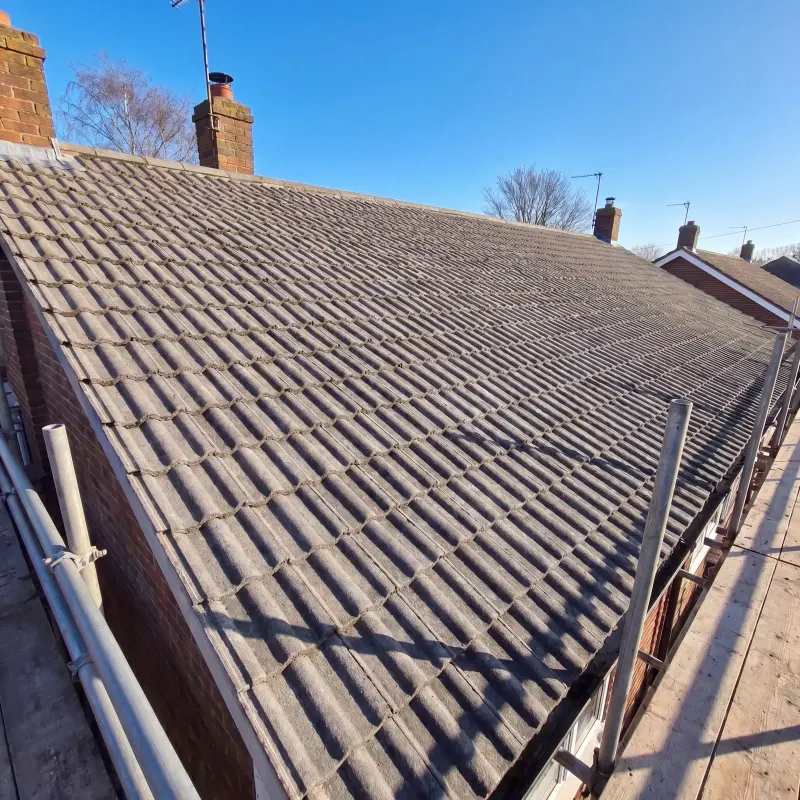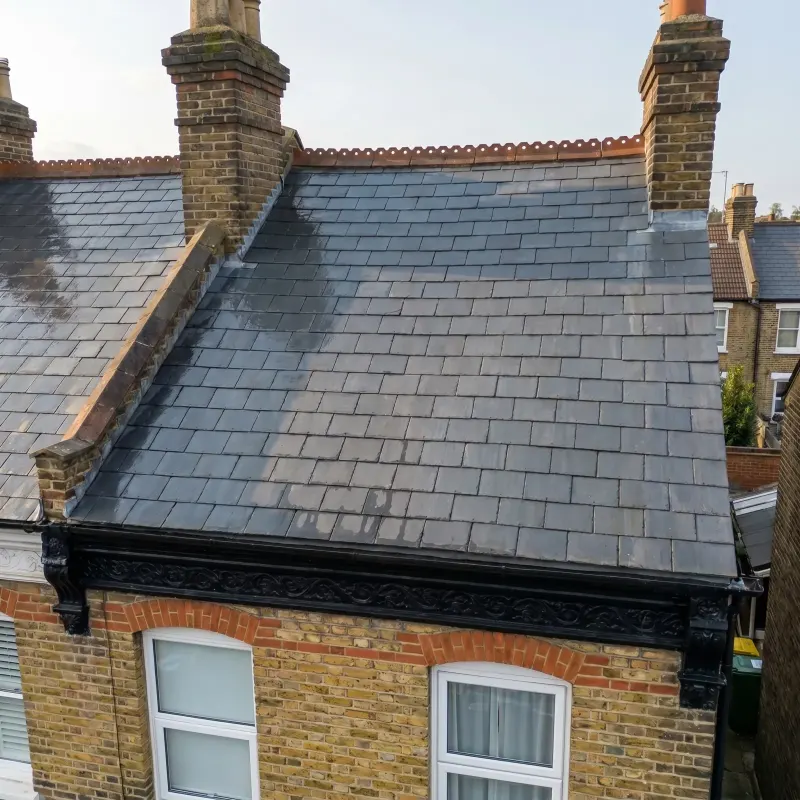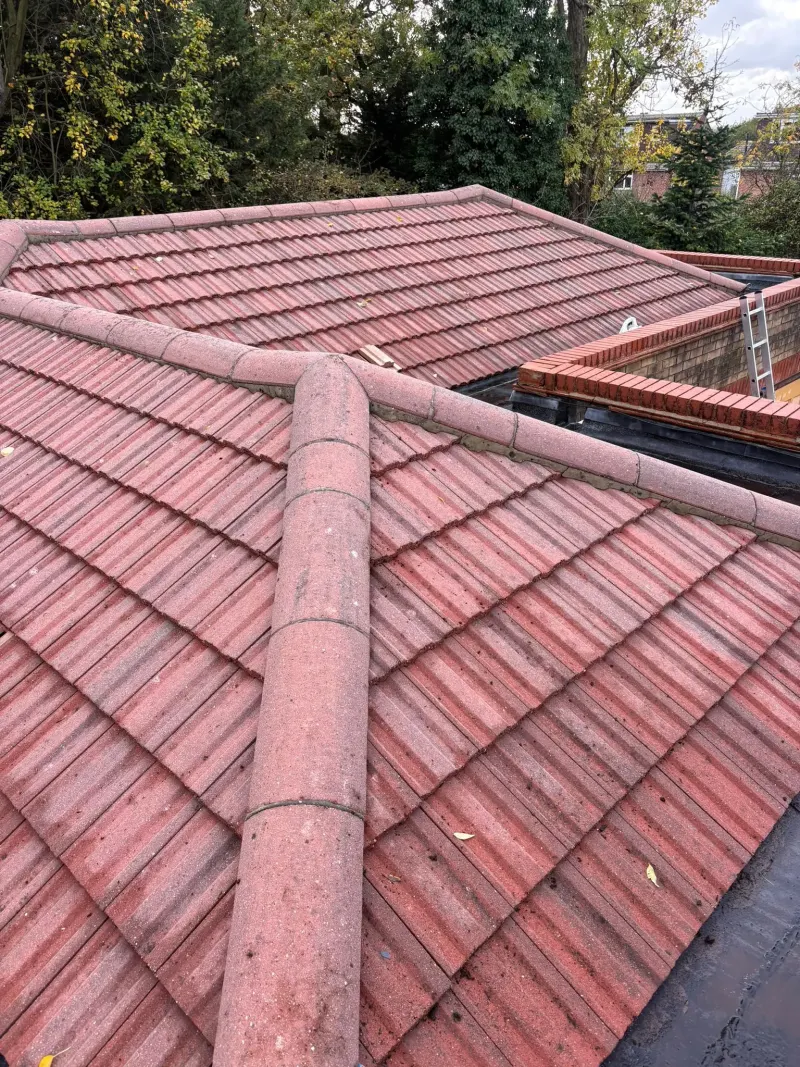
Most roofs in Essex don’t need cleaning every year. Clean when moss, lichen or algae is clearly building up, then let a biocide treatment do the work in between. Roofs under trees or facing north green up fastest; open, sunny roofs can go much longer.
There’s no fixed timetable
Anyone who tells you every roof needs cleaning on a set schedule is selling something. How quickly a roof greens up depends on a handful of things, and they vary from street to street.
What makes a roof grow moss faster
- Shade. North-facing slopes and roofs under trees stay damp longest. That’s the biggest single factor.
- Tile type. Rough, ageing concrete tiles hold moss far more easily than smooth slate.
- Nearby trees and woodland. Leaf litter and spores, plus shade. Think of homes by Hockley Woods, Norsey Wood or Thorndon Park.
- Damp air. Homes near the coast and rivers, from Southend to the Crouch, stay damp for longer.
- Past jet washing. A roughened surface gives moss more to grip.
Essex weather helps a bit
Essex is one of the driest counties in England, so roofs here usually grow moss more slowly than in the wetter west. The wet months still do the damage: moss grows most from autumn to spring, which is why roofs often look worst in early spring.
How to judge your own roof
- Patches of green moss cushions, especially on the shaded side.
- Black streaks running down the tiles (algae).
- Grey, white or yellow crusty spots (lichen).
- Moss in the gutters or on the ground after wind and rain.
A few spots on an old roof is normal. When growth starts to cover a slope, or moss is filling the gutters, it’s time. More detail is in our post on signs your roof needs cleaning.
Making a clean last longer
The biocide treatment is what stretches the gap between cleans. It keeps killing new growth as it lands. On roofs prone to growth, a treatment on its own every so often can mean you never need another full clean.
Can you clean any time of year?
Yes, but the treatment needs dry weather to soak in, so we plan around the forecast. Spring and autumn are popular; winter works on dry days.
Is it different for each kind of roof?
Yes. Concrete tiles grow moss fastest, because their rough surface gives roots something to grip. Clay tiles grow lichen and moss more slowly but are softer, so they need the gentlest clean. Slate holds the least moss but gets algae streaks and ridge growth. That means a concrete roof under a tree may want attention every few years, while an open slate roof can go much longer.
What does a typical cycle look like?
For most of the Essex roofs we see, the pattern is a full clean when growth has built up, a biocide finish at the end of that clean, and then a treatment on its own every so often when the first signs come back. That way the roof never gets back to thick moss, and you avoid paying for a full clean each time.
Does a new roof need cleaning?
Rarely. Roofs on homes built in the last ten or fifteen years usually only need a look on the shaded side. If algae or moss has started there, a treatment on its own is normally enough. If it doesn’t need anything, we’ll tell you so.
Does the area of Essex make a difference?
Yes. Roofs near woodland, such as homes beside Epping Forest, Hockley Woods or Thorndon Park, sit in shade and leaf fall and green up faster. Coastal and estuary towns such as Southend, Canvey Island, Clacton and Burnham-on-Crouch stay damp and grow a lot of lichen and algae. Open, sunny estates inland can go much longer between cleans.
What does it cost to leave it too long?
More work, and more risk to the roof. Thin growth comes off with a treatment. Thick moss needs hand clearing, more time and more care. Gutters fill up, and overflows start staining walls. Dealing with a roof when growth first shows is easier on the tiles and on your wallet than waiting until it’s covered.
Can I just treat the roof every year instead?
Most roofs don’t need that. Treating when it’s needed, not on a timetable, is the honest approach. On a very shaded roof under trees, a more regular treatment can make sense; on an open roof it would be money wasted. We’ll tell you what we think your roof needs.
What if my neighbour’s roof is covered and mine isn’t?
That’s common. The two roofs may face different ways, have different tiles or sit under different trees. Spores from a mossy roof next door will land on yours, though, so if you share a terrace or semi, it can be worth both roofs being done at the same time.
Do I need to clean the roof if I can’t see it from the ground?
If you can’t see it, check it anyway once in a while. Back slopes, flat-roofed extensions behind parapets and roofs above conservatories are easy to forget, and they are often the shadiest parts of a house. A photo from an upstairs window, or from a neighbour’s garden with their permission, tells you a lot. Moss turning up in a gutter you can see is also a clue that a slope you can’t see is shedding.
In short
- No fixed timetable: clean when growth is clearly building up.
- Shade, trees, damp air and concrete tiles all speed growth up.
- A biocide treatment between cleans stretches the gap.
- New and open roofs rarely need much.
Should I clean before selling a house?
A clean roof makes a house look cared for in photos and on viewings, and a buyer’s surveyor will note heavy moss. If you’re selling, it’s worth booking early enough for the dead growth to wash away, as that can take a few weeks after a treatment.