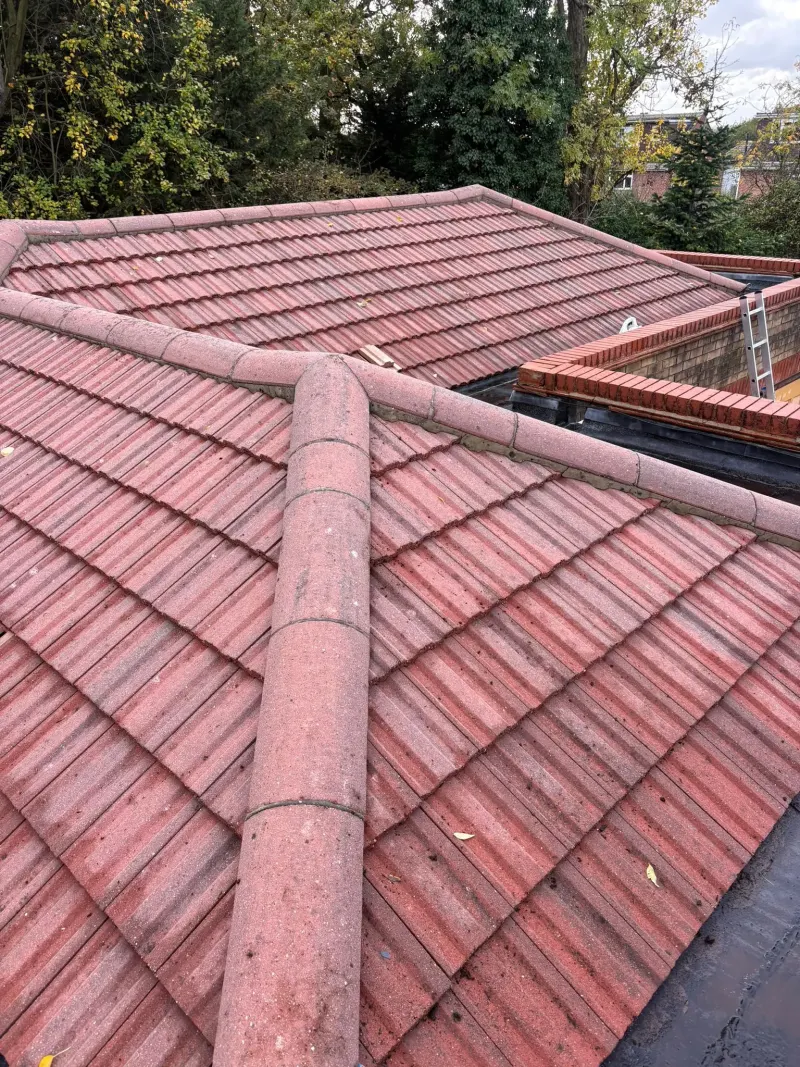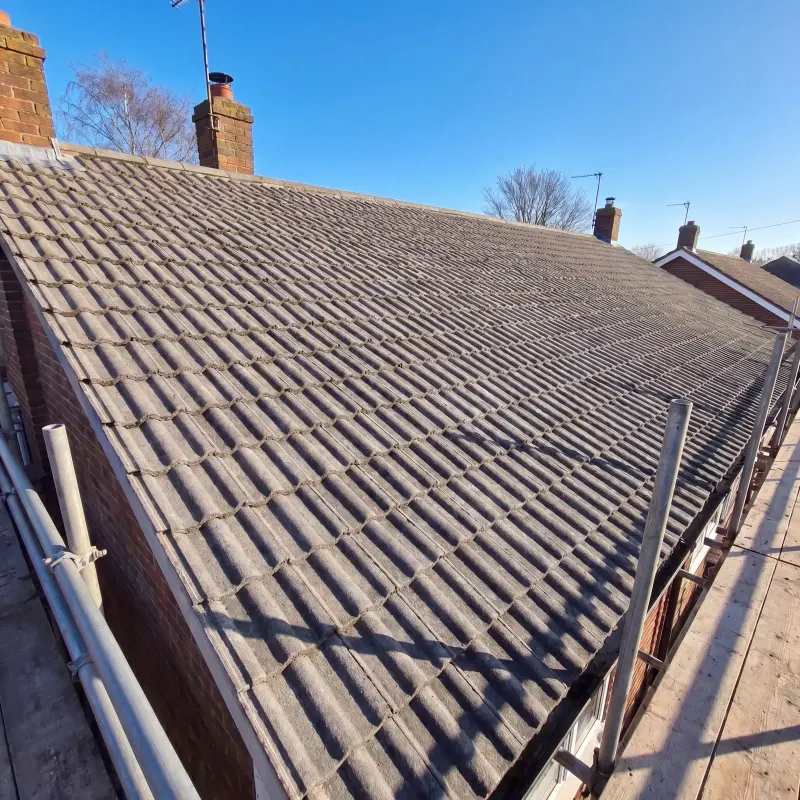
A biocide starts killing moss, lichen and algae straight away, and you’ll usually see growth change colour within days to a few weeks. The dead growth then loosens and washes off with the rain over the following weeks and months. Lichen is slowest. The treatment keeps working against new growth for months afterwards.
What does a biocide do?
A biocide is a treatment that kills living growth: moss, lichen, algae and their spores. On a roof it’s applied at low pressure on a dry day. It soaks into the growth and the surface of the tiles, kills what is there, and keeps working against new spores that land afterwards.
Why doesn’t the roof look clean the next day?
Because killing growth and removing it are two different things. Moss and algae are killed quickly, but lichen in particular stays stuck to the tile after it dies. It only lets go as it breaks down and the rain washes it away. That’s slower, but it means nothing is scraped or blasted off your tiles.
What should I expect, step by step?
The first days
Algae streaks often lighten first. Moss starts to brown off. If the roof was also hand-cleared and soft-washed, it already looks much cleaner on day one.
The first few weeks
Dead moss dries and starts to come away. Lichen changes colour, usually going paler or white. Some debris may wash into the gutters.
The next few months
Lichen flakes and washes off with the rain. The roof evens out. How long this takes depends on how much rain there is and how old and thick the lichen was.
Is a treatment on its own enough?
For a roof with light growth, often yes. It’s the gentlest way to clean a roof: nothing is removed by force, and the rain does the rest. For a roof with thick moss, a treatment alone would leave dead cushions sitting in the laps and gutters for a long time, so a full clean with hand clearing comes first.
How long does the protection last?
It keeps working against new growth for months. How long depends on the roof: shade, trees, damp air and tile type all matter. Roofs under trees or near the coast tend to need a top-up treatment sooner than open, sunny ones.
What can stop a treatment working?
- Rain too soon after. That’s why we plan around a dry spell.
- A roof soaked or frozen when it goes on.
- Thick moss left in place, which a treatment kills but can’t remove quickly.
Is it safe for my garden and pets?
The treatment is applied to the roof, at low pressure, and kept there as far as possible. We take care around plants, ponds and pets, and ask you to keep pets in while we work. We’ll talk you through it when we quote.
How often should a roof be treated?
When the first signs of growth come back. On many roofs that means every few years; on shaded roofs, more often. Our post on how often to clean a roof in Essex goes into more detail.
Why has my roof gone white or orange after a treatment?
That’s dead growth changing colour. Moss often goes brown or orange as it dies, and lichen often turns white or pale. It looks odd for a few weeks, but it’s a sign the treatment is working. The rain then washes it away.
Can I speed it up?
Not safely. The rain does the final stage, and trying to rush it by brushing, scraping or jet washing is exactly what damages tiles. If thick dead moss is sitting in the laps, it should be lifted off by hand, which is part of a full clean.
Does the treatment work on the gutters and walls?
It’s applied to the roof. Gutters are cleared by hand, and walls below are separate surfaces. If algae on walls is bothering you, mention it when you ask for a quote.
What if it rains the day after?
Once the treatment has had a dry spell to soak in, rain is fine and helps wash dead growth off. We choose a dry window for exactly that reason. If heavy rain arrives early, we’ll talk to you about whether a top-up is needed.
Is it the same as a weedkiller?
No. A roof biocide is designed for moss, lichen and algae on hard surfaces. Garden weedkillers and lawn moss killers are different products for different jobs and shouldn’t be used on a roof.
Do I need to do anything after a treatment?
No. Just let the weather do its work. Keep an eye on the gutters if the roof had a lot of growth, as some dead material washes down over the following weeks.
Is a treatment better value than a full clean?
For a roof with light growth, usually yes. It does the job gently and costs less than a full clean. For a roof with thick moss, a treatment alone leaves dead moss sitting on the roof and in the gutters for a long time, so a clean first is better value overall.
In short
- Growth starts dying within days.
- Dead moss and lichen wash off over weeks and months.
- Lichen is the slowest to go.
- The treatment keeps working against new growth for months.
Next step
Send us a photo of your roof and your postcode. We’ll tell you whether a treatment on its own will do or whether it needs a full clean first.