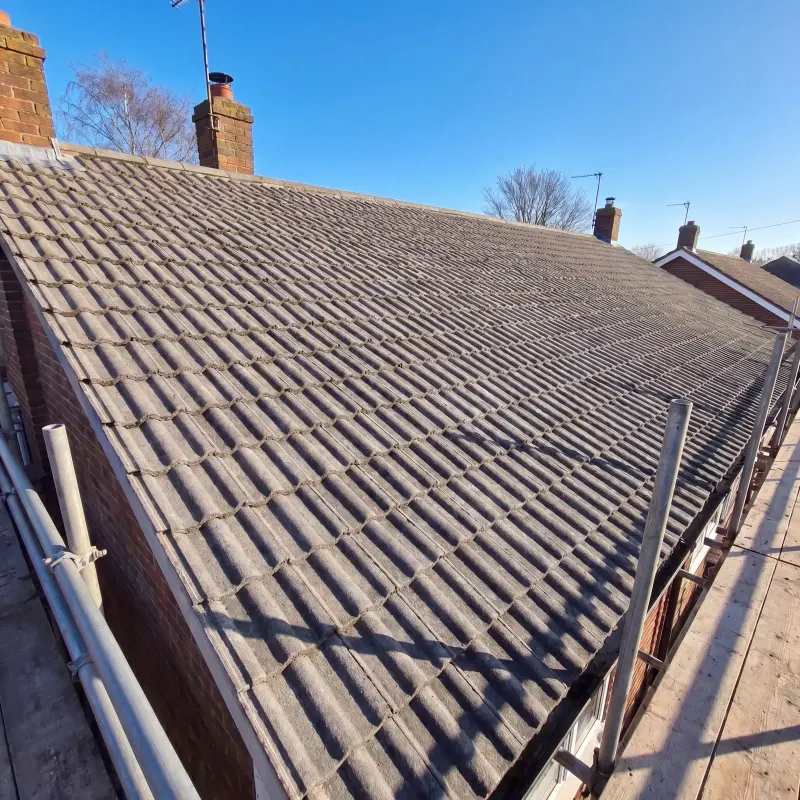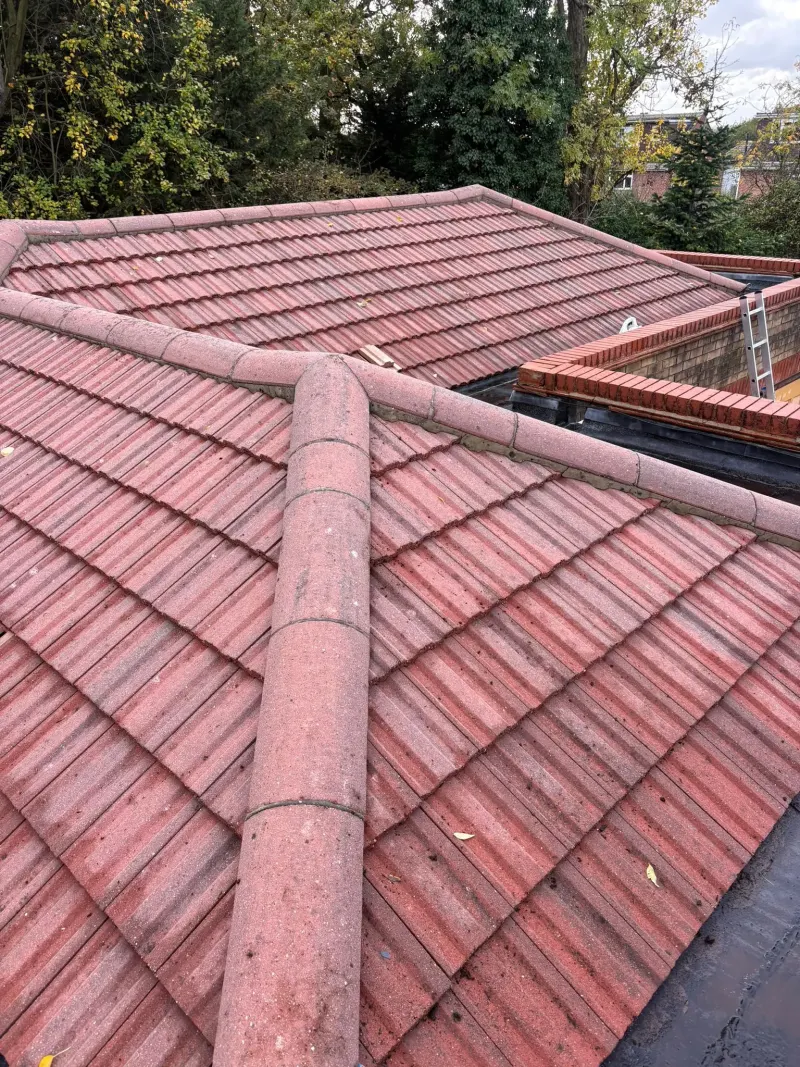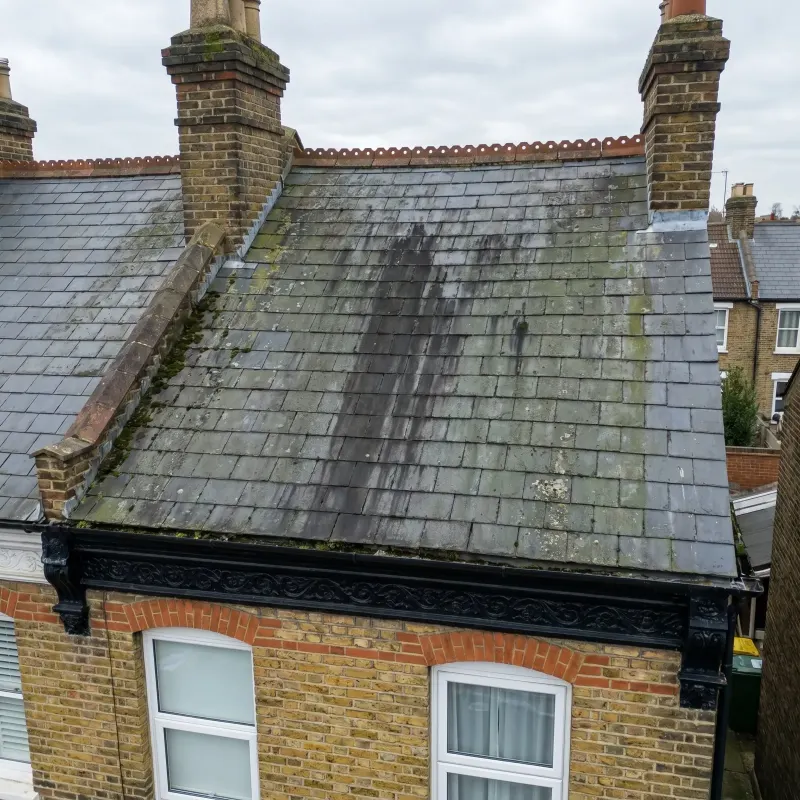
Black streaks running down roof tiles are usually algae, a living growth rather than dirt or soot. It spreads with rainwater, so it forms streaks down the slope. A low-pressure soft wash with a biocide kills and removes it; a pressure washer only spreads it and roughens the tiles.
Is it dirt, soot or algae?
On most Essex roofs it’s algae. Dirt and soot sit on the surface and wash off fairly evenly in the rain. Algae grows, so it gets darker over time and follows the path of the rainwater down the roof, which is what gives it that streaky look.
A good test from the ground: if the dark marks are heaviest below the ridge, below chimneys or under anything that sheds water, and they run in lines down the tiles, it’s almost certainly algae.
Why does algae grow in streaks?
Because rain carries it. Algae spreads through water, so new growth follows the same lines the rain takes down the roof. Over time those lines darken into streaks. On roofs with a lot of shade, the streaks can join up until the whole slope looks dark.
Does algae damage the roof?
Not much on its own, but it isn’t harmless. Algae holds a thin film of moisture on the surface and gives moss and lichen a damp, food-rich layer to start on. A roof that is streaked with algae this year is often a roof with moss on it in a few years. It also makes a house look tired and older than it is.
Why are some roofs streaked and others not?
- Shade: the north slope and roofs under trees stay damp longest.
- Damp air: homes near the coast, rivers and marshes, from Canvey to Burnham-on-Crouch, see a lot of algae.
- Tile type: slate and smooth tiles show streaks clearly because there’s less moss to hide them.
- Roof shape: water running off a higher roof, chimney or dormer onto a lower one often leaves a streak below it.
Can I wash black streaks off?
Not properly with water alone. Algae is alive and attached to the surface. Water or a brush might lighten it, but it grows back from what’s left. High pressure takes the streaks off for a while but also strips the tile surface, and the algae returns faster on a roughened tile.
How do we remove them?
We soft-wash the roof: a cleaning solution applied at low pressure that kills the algae and lets it rinse away. A biocide finish then keeps working, so new algae landing on the roof is killed before it can form streaks again. The dark marks usually lift on the day; any faint staining that’s left fades over the next few weeks.
Will the streaks come back?
Eventually, on a shaded or damp roof, but much more slowly. Algae spores land on every roof all the time. The biocide stops them taking hold for a long while. When faint streaks start to show again, a treatment on its own deals with them before they darken. That’s far easier and cheaper than letting it build back up.
Do black streaks mean the roof is old?
No. We see streaks on roofs only ten or fifteen years old, especially slate and smooth modern tiles on shaded slopes. It’s about where the roof is and how much sun it gets, not how old it is.
Streaks on render, walls and fascias
The same algae often streaks render, painted walls and fascias below the roof. Those are separate surfaces with their own cleaning methods. If you’d like those looked at too, mention it when you ask for a quote and we’ll tell you what we can help with.
Is the black on my roof mould?
Not usually. People often call it mould, but on an outside roof the dark streaks are almost always algae. The treatment is the same either way: a soft wash and biocide.
Why are the streaks worse below the chimney?
Water running off the chimney and its flashings concentrates on the tiles below. That steady line of water is exactly where algae grows best, so the darkest streak on a roof is often directly under the stack. Valleys and areas under dormers show the same pattern.
Will treating the roof stop streaks on the walls too?
It helps. Algae on walls is often fed by water running off a dirty roof or overflowing from blocked gutters. A clean roof and clear gutters cut that off at the source, although existing streaks on the walls need cleaning separately.
Do black streaks mean water is getting in?
No. The streaks are on the outside surface of the tiles and are a sign of where water runs, not of a leak. If you also have damp in the loft or stains on ceilings, that is a separate problem for a roofer, usually from a slipped tile, a failed flashing or worn underlay.
In short
- Black streaks are almost always algae, a living growth.
- Rain spreads it down the slope, so it forms lines.
- A soft wash and biocide remove it; water alone won’t.
- Treat again when faint streaks return.
Next step
Take a photo of the streaked slope from the garden or the street and send it with your postcode. We’ll tell you if it’s algae, whether a soft wash or just a treatment is needed, and give you a free quote.